Last Updated: August 22 2026
In Ontario, can a landlord install security cameras in shared hallways or courtyards and what should I do if I think it interferes with my tenancy?
In Ontario rentals, tenants generally have a low reasonable expectation of privacy in shared common areas like hallways and open courtyards, and surveillance is often treated as permissible when it targets safety with limited intrusion, but you may still have rights if the cameras create harassment or substantial interference with your reasonable enjoyment of the unit under the Residential Tenancies Act, 2006 (RTA) and related case law such as R. v. Edwards, [1996] 1 S.C.R. 128 and R. v. Hoang, 2024 ONCA 361 If you have a specific camera placement or lease clause concern, Cross Legal Services can help a paralegal assess the facts, review your tenancy terms for RTA compliance, and outline practical next steps (including evidence to document interference) in Ontario; call (289) 443-0675 for guidance.
Add this website to Google Preferred Sources
Introduction
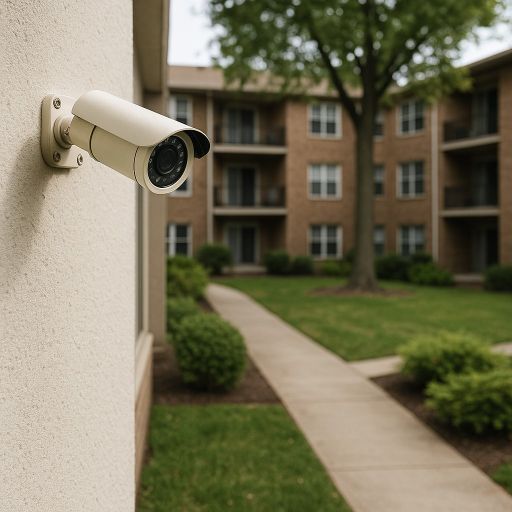 As surveillance technology becomes more
affordable and accessible, tenants and landlords increasingly find themselves
at odds over the use of security cameras in residential rental complexes.
Whether a camera is placed to monitor a doorway, a shared hallway, or an open
courtyard, the key legal question is often this: Does a tenant have a
reasonable expectation of privacy in the common areas of a residential
building?
As surveillance technology becomes more
affordable and accessible, tenants and landlords increasingly find themselves
at odds over the use of security cameras in residential rental complexes.
Whether a camera is placed to monitor a doorway, a shared hallway, or an open
courtyard, the key legal question is often this: Does a tenant have a
reasonable expectation of privacy in the common areas of a residential
building?
The answer, as recent Ontario decisions show, depends heavily on the context.
Note: Please contact Cross Legal Services by phone at: (289) 443-0675 to discuss any specific questions that you may have.
What Is a “Reasonable Expectation of Privacy”?
The foundational test for determining whether a person has a reasonable expectation of privacy comes from the Supreme Court of Canada in R. v. Edwards, [1996] 1 S.C.R. 128. The Court established a multi-factor analysis, now referred to as the 'Edwards factors,' which include: control over the area, the ability to regulate access, ownership, and whether the person had a subjective and objectively reasonable expectation of privacy in the circumstances.
These factors guide both constitutional and civil assessments of privacy.
No Reasonable Expectation of Privacy in Shared Common Areas
In a series of recent decisions from the
Ontario Court of Appeal, courts have held that tenants do not have a reasonable
expectation of privacy in shared common areas such as hallways, stairwells, and
open courtyards.
In R. v. Hoang, 2024 ONCA 361, the Court concluded that hallway surveillance footage collected from an apartment building’s common area was admissible because the hallway was accessible to other residents and management. The Court noted that visibility to others and shared access significantly diminished any expectation of privacy.
Lease Agreements and the Residential Tenancies Act
While statutory and common law principles provide the general framework, the contractual elements of the tenancy agreement may introduce additional considerations. Lease agreements often contain provisions about tenant conduct, shared space use, or surveillance. However, these provisions are enforceable only if they comply with the Residential Tenancies Act, 2006 (RTA).
Under section 4 of the RTA:
“If a provision in a tenancy agreement is inconsistent with this Act or any other Act or a regulation made under this or any other Act, the provision is void.”
This means that landlords and tenants cannot contract out of the Act. Even if both parties agree to a lease clause, that clause will be unenforceable if it undermines statutory tenant protections or violates public policy.
Section 17 of the RTA affirms that common law principles of contract law—specifically, the interdependence of covenants—continue to apply unless the Act provides otherwise:
“Except as otherwise provided in this Act, the common law rules respecting the effect of a serious, substantial or fundamental breach of a material covenant by one party to a contract on the obligation to perform of the other party apply with respect to tenancy agreements.”
The Landlord and Tenant Board’s Approach: Surveillance as Interference?
While the Charter protects against state intrusion, the RTA governs relations between private landlords and tenants. Here, the issue is not always privacy in the constitutional sense, but rather whether surveillance substantially interferes with the tenant’s reasonable enjoyment of the premises.
In Roele v. Sexton, 2023 ONLTB 46090, the Landlord and Tenant Board addressed a complaint by a landlord that the tenant’s video doorbell—pointed solely at her own front door—constituted an invasion of others' privacy. The Board dismissed the claim, finding no substantial interference. This ruling supports the view that focused, non-intrusive surveillance for self-protection may be justified under the RTA.
Condominiums and Surveillance: A Distinct Framework
It is important to distinguish between rental complexes governed by the Residential Tenancies Act, 2006 (RTA), and condominiums governed by the Condominium Act, 1998. In condominium corporations, rules and bylaws passed by the board of directors often regulate the use of surveillance cameras, and enforcement is conducted through internal compliance mechanisms or the Condominium Authority Tribunal.
While unit owners and residents in condominiums may also install surveillance devices, they are typically subject to condominium rules and policies that may be more restrictive than the RTA. For example, a condominium board may prohibit doorbell cameras or require that any installation of surveillance equipment be approved in writing. Importantly, although the reasonable expectation of privacy in common elements such as hallways or lobbies remains low, the enforceability of restrictions is often higher in the condominium context due to the governance structure.
Application of the Edwards Factors to Common Areas
The Edwards factors, as articulated in R. v. Edwards, [1996] 1 S.C.R. 128, provide a framework to assess whether a person has a reasonable expectation of privacy in a particular space. In the context of common areas within a rental complex—such as courtyards, hallways, stairwells, or laundry rooms—the application of these factors generally leads to the conclusion that no such expectation exists.
- Control Over the Area: Tenants typically do not have exclusive control over shared spaces. These areas are managed and maintained by the landlord or property manager.
- Ability to Regulate Access: Tenants cannot unilaterally exclude others from these areas, which are open to all residents, staff, and often guests or delivery personnel.
- Presence of Signage or Surveillance: The existence of posted surveillance signs or visible cameras further reduces any subjective expectation of privacy.
- Public Visibility: Common areas are frequently visible through windows or accessed by multiple tenants, further eroding any claim to privacy.
Taken together, the Edwards factors strongly support the conclusion reached in cases such as R. v. Hoang and R. v. Yu—that individuals do not have a reasonable expectation of privacy in shared common areas of residential rental complexes.
Conclusion
The legality of surveillance cameras in
rental housing hinges on location, purpose, and impact. While tenants cannot
assume full privacy in shared spaces, they retain rights against harassment or
substantial interference with their use of the rental unit. Likewise, landlords
must balance safety and privacy concerns and comply with both statutory
obligations and contractual limitations.
When disputes arise, clarity under the Residential Tenancies Act and guidance from recent case law can help resolve whether a camera’s placement is justified, unlawful, or an overreach.
Footnotes
1. R. v. Edwards, [1996] 1 S.C.R. 128.
2. R. v. Hoang, 2024 ONCA 361 (CanLII).
3. R. v. Yu, 2019 ONCA 942 (CanLII).
4. Residential Tenancies Act, 2006, SO 2006, c 17, s. 4.
5. Roele v. Sexton, 2023 ONLTB 46090 (CanLII).
6. Condominium Act, 1998, SO 1998, c 19.
NOTE: A significant quantity of online queries pertaining to “lawyers near me” or “best lawyer in” frequently indicate a necessity for prompt and competent legal assistance rather than a particular job title. In Ontario, “licensed paralegals” are governed by the same Law Society that regulates lawyers and are permitted to represent clients in specific litigation issues. Skills in advocacy, legal assessment, and procedural expertise are fundamental to that function. Cross Legal Services provides legal representation within its licensed scope, focusing on strategic positioning, evidence preparation, and compelling advocacy aimed at achieving efficient and favourable outcomes for clients.